



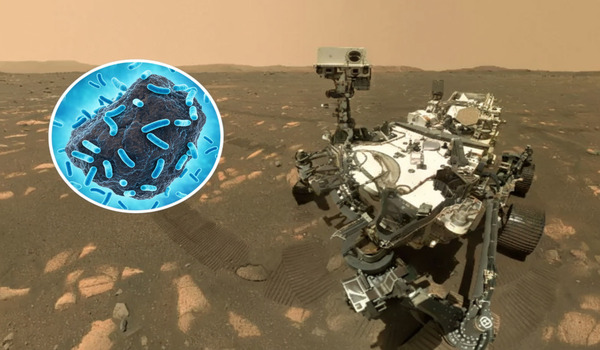
NASA has announced it will hold a teleconference this Wednesday, September 10, at 11:00 a.m. EDT, to present a discovery related to a Martian rock analyzed by the Perseverance rover. The sample, named “Sapphire Canyon,” was collected in July 2024 from the Neretva Vallis region, an ancient network of rivers that billions of years ago fed water into Jezero Crater.
The event has generated strong anticipation, as NASA rarely calls press conferences of this nature without having something significant to reveal. While the agency has not released details, the announcement is tied to a soon-to-be-published scientific paper and could be related to the detection of “biosignatures” — chemical evidence that may suggest the existence of ancient microbial life on Mars.
According to NASA, key figures participating in the teleconference will include Sean Duffy, Acting NASA Administrator, Nicky Fox, Associate Administrator for NASA’s Science Mission Directorate, and Katie Stack Morgan, Perseverance Deputy Project Scientist. Other experts in Mars exploration will also join, including Lindsay Hays and planetary scientist Joel Hurowitz from Stony Brook University.
The live audio and visuals of the teleconference will be streamed on NASA’s official website: www.nasa.gov/live.

Possible Lead About the Announcement
The website NASA Watch, founded by Keith Cowing, has provided intriguing context that has fueled speculation. Cowing, a former NASA employee, journalist specializing in space and astrobiology, and member of the Explorers Club, suggested that the announcement will likely be related to astrobiology — the study of life’s origins, evolution, and potential existence beyond Earth.
In a recent article, NASA Watch pointed to a presentation made during the 56th Lunar and Planetary Science Conference (LPSC) earlier this year. During that event, Joel Hurowitz — who will also be part of Wednesday’s teleconference — presented research titled “The Detection of a Potential Biosignature by the Perseverance Rover on Mars.”
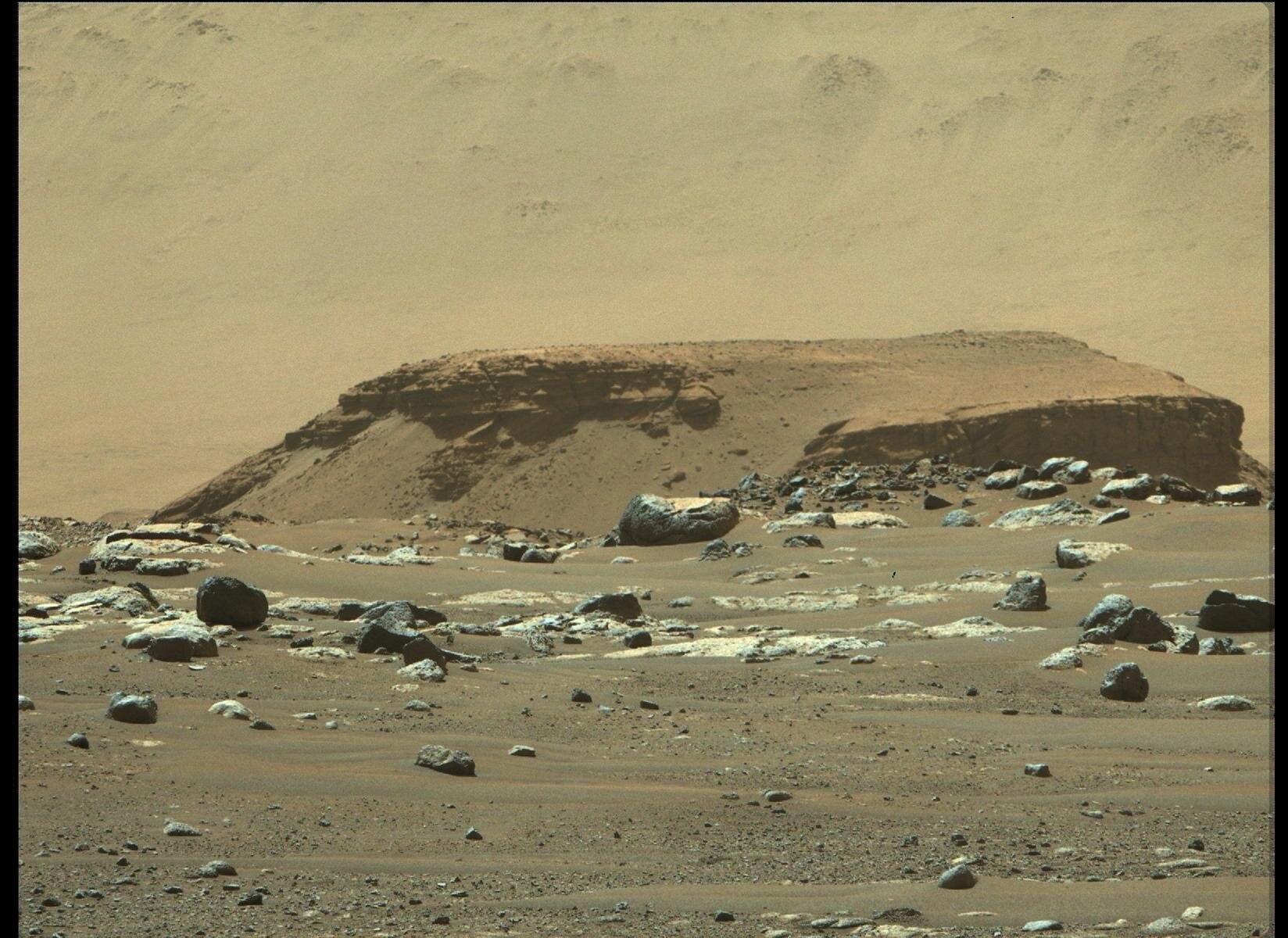
According to the presentation, Perseverance investigated a distinct set of clay outcrops and conglomerates upon entering Neretva Vallis. These types of geological formations are considered ideal for preserving microscopic fossils or chemical traces of past life.
“We report measurements of these rocks and describe the discovery of a potential biosignature,” Hurowitz stated during the LPSC presentation.
NASA Watch emphasizes that this remains an educated guess, but the overlap between the data presented at LPSC and the theme of NASA’s upcoming announcement cannot be overlooked, strongly suggesting that the discovery may indeed involve signs of ancient Martian life.
Why This Matters
Jezero Crater is considered one of the most promising locations for the search for ancient life on Mars. Billions of years ago, it contained a river delta — an environment perfect for preserving chemical and structural traces of past microorganisms.
If NASA announces the detection of biosignatures, it would represent a historic milestone in space exploration. However, the agency is known for its cautious approach. In past announcements, such as the detection of organic molecules on Mars, NASA scientists were careful to emphasize that such compounds do not constitute definitive proof of life, as they can also result from non-biological geological processes.
NASA’s Track Record of Major Announcements
This type of high-profile teleconference is not unprecedented. In 2018, NASA held a similar event to announce the discovery of organic molecules by the Curiosity rover. In 2020, the agency revealed the detection of phosphine in Venus’s atmosphere, a gas that on Earth is strongly associated with microbial life.
These past events show that when NASA brings together high-ranking officials and leading scientists for a coordinated announcement, it usually indicates a scientifically significant and potentially controversial finding.
Future Perspectives
Since landing on Mars in February 2021, Perseverance has collected 30 rock samples, with only six tubes remaining empty. In addition to searching for evidence of past life, the rover tests materials for future space suits and monitors the Martian climate, providing critical data for upcoming human missions.
If the “Sapphire Canyon” rock does indeed contain evidence of ancient microbial life, final confirmation will only come once the samples are returned to Earth through NASA’s Mars Sample Return mission, scheduled for later this decade.
For now, excitement is building worldwide. Scientists, space enthusiasts, and even skeptics are eagerly awaiting Wednesday’s announcement, which could turn out to be a historic moment in humanity’s quest to answer the question: Are we alone in the universe?