


The Nazca mummies are once again at the center of controversy, this time in defense of their legitimacy. The voice supporting the authenticity of the specimens known as the “Nazca tridactyl mummies” comes from none other than the respected Stanford University researcher, Dr. Garry Nolan.
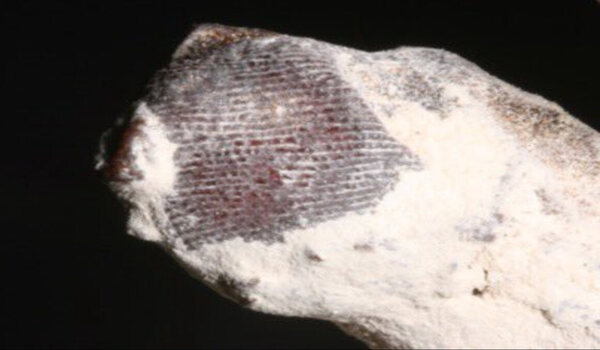
During his appearance on the Disclosure Team program, hosted by Vinnie Adams, Nolan discussed the enigmatic tridactyl specimens from Peru, which have sparked debates around the world. He highlighted a striking forensic detail: “the fingerprints show characteristics that do not match those of humans or primates.” According to Nolan, faking such prints with this level of complexity would be an extraordinary feat.
The researcher makes important distinctions between the different specimens. Some appear clearly artificial, while others show genuine age, confirmed through carbon dating. The situation became more complicated in 2023, when the Peruvian Ministry of Culture seized and confiscated some of the mummies at a Peruvian airport. The authorities claimed they were artificial dolls and used these items to argue that all specimens held by the research team were fraudulent.
Flavio Estrada, an archaeologist at the Institute of Legal Medicine and Forensic Science, stated at a press conference last year that expert analysis revealed that two dolls and a Nazca tridactyl hand were “constructed” using human and animal bones glued together with synthetic material.
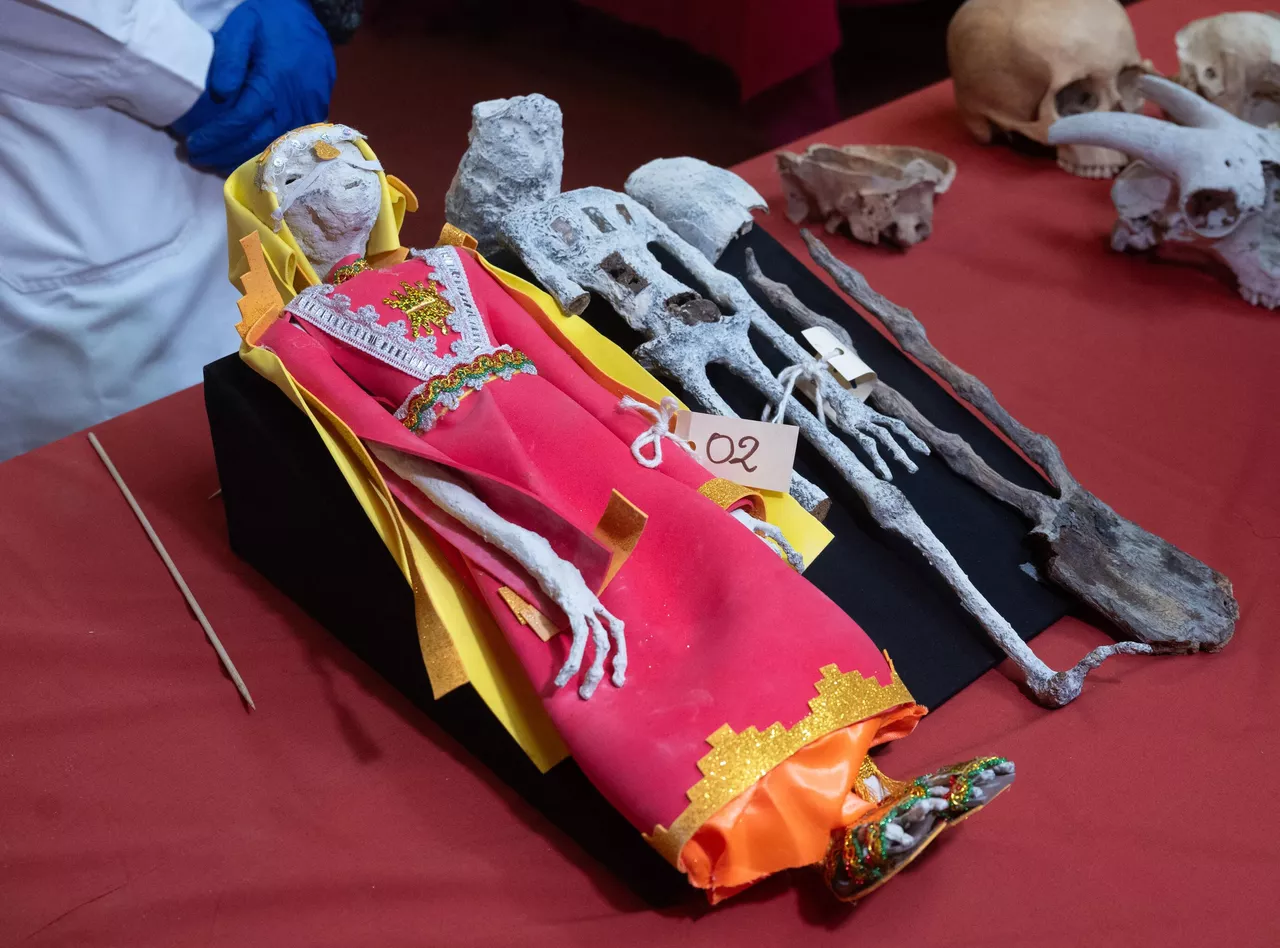
However, this statement sparked considerable controversy. Supporters of the mummies’ legitimacy argue that these dolls were purchased as tourist souvenirs and have no connection to the real Nazca specimens.
Currently, the Peruvian Ministry of Culture’s claim is being challenged in a $3 million lawsuit. According to the defenders, the confiscated items are unrelated to the legitimate specimens, which underwent thorough scientific analysis.
Science Under Pressure
Nolan also outlined the challenges of conducting serious research under public scrutiny. The team requested that he film every stage of the analysis, but he refused: “I’m not going to be filmed. Science isn’t a reality show.”
According to Nolan, a proper investigation would require around $5 million, multiple research teams, strict controls, and preparation for peer-reviewed publication. “Doing science under media pressure is risky. Expectations for quick results can lead to premature conclusions that end up sensationalized before proper verification,” he said.
Reference to genetic complexity also plays a role in his analysis. According to Nolan’s explanation to Adams, single mutations like polydactyly cannot account for the complex anatomical features observed, noting that “evolution doesn’t work quite like that” and would require multiple genetic modifications across the genome.

But, obviously, Dr. Nolan’s statements and his recent stance have sparked debates on social media, with supporters of the mummies’ authenticity applauding, while others, convinced that this is just another fraud orchestrated by Jaime Maussan, strongly criticize it.
On his X account, Colorado Springs attorney Josh McDowell — one of the enthusiasts of the Nazca specimens, who has been regularly sharing updates about them — posted new photographs yesterday highlighting the issue of the fingerprints. In his post, he stated:
“Some of the Nazca mummies have better preserved prints than others. Antonio’s fingertips, for example, are not preserved well enough to see prints. The humanoid bodies I’ve seen all have nails on their fingers and toes.”
Some of the Nazca mummies have better preserved prints than others. Antonio's fingertips, for example, are not preserved well enough to see prints. The humanoid bodies I've seen all have nails on their fingers and toes. pic.twitter.com/LnOlD6ZfTl
— Josh McDowell (@pikespeaklaw) August 23, 2025Additionally, on August 22, McDowell shared some photos of one of the specimens called “Paloma.” In the images, it is possible to see that the mummy has hair. He pointed out that, unlike the other mummies, this one has hair that personally appears “reddish/copper-colored.” McDowell raised the hypothesis: “Could this red hair be genetic (like that of the Tarim mummies in China) or is it an effect of eumelanin degradation, which transformed the originally dark hair into red over millennia?”
Additional photos of Paloma. Unlike the other mummies, she has hair. In person you can see it's reddish/copper colored. Is this true genetic red hair (like China's Tarim mummies?) or an effect of the degradation of the eumelanin, that turned her dark hair to red over millenia?1/2 pic.twitter.com/6hF4OXSE1J
— Josh McDowell (@pikespeaklaw) August 21, 2025Returning to Dr. Nolan, during his appearance on the Disclosure Team program, the Nobel Prize nominee highlighted, in addition to the anomalous fingerprints of the Nazca tridactyl beings, the need for more comprehensive studies. He recommended further DNA analysis of the specimens, now using bone marrow samples.
El Nominado al Premio Nobel de la Ciencia; Dr. Garry Nolan resalta las huellas dactilares anomalas de los Seres Tridactilos #Nazca; insta a realizar nuevos estudios del ADN Nazca Tridactilos, ahora con muestras a partir de la Médula.
Cc. @pikespeaklawhttps://t.co/s61dj0mFa2 pic.twitter.com/Yz04oHCEvA
— J. Alberto (@admpubmx) August 22, 2025The case of the Nazca mummies remains one of the most controversial and debated topics in ufology, and it seems we are still far from a definitive verdict on their authenticity. The recent stance of Dr. Garry Nolan, a respected researcher at Stanford University, has provided scientific support for the analysis of some of the tridactyl specimens, highlighting anomalous fingerprints and recommending further genetic investigations using bone marrow samples. Nevertheless, debates and legal proceedings continue, reflecting the complexity and polarization surrounding the topic.
In addition to addressing the mummies, Nolan also discussed his innovative research on consciousness as an interface mechanism with non-human intelligences. In his studies, he identified measurable brain changes in UFO witnesses, suggesting that meditative states, psychedelic experiences, or other techniques may allow access to different levels of perception and interaction with these entities. The research focuses on the so-called “default mode network,” responsible for the sense of identity, whose temporary suppression may facilitate contact experiences.
Artificial intelligence has proven to be a revolutionary tool in both the analysis of physical specimens and the study of consciousness. Nolan explains that AI allows for the processing of massive amounts of brain imaging data and material spectral information, providing capabilities previously unattainable for human researchers.
Nolan’s main conclusion is that understanding phenomena related to non-human intelligences may emerge from both the investigation of physical artifacts and the study of consciousness — ideally conducted in parallel, with scientific rigor and protected from media sensationalism. His work suggests that developing and training human consciousness could be essential for future contact scenarios, making this area of study as important as the analysis of physical evidence.
Below, watch the interview with Dr. Nolan: