


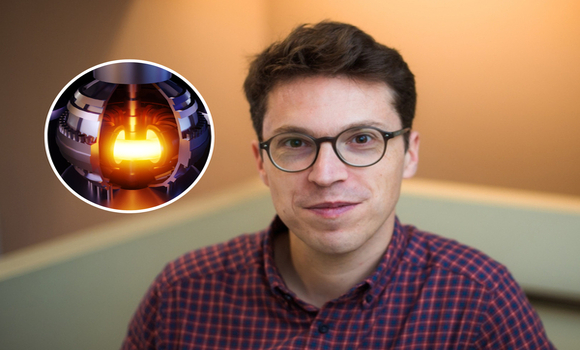
Nuno Loureiro was not a household name. He did not seek publicity, avoided sensational interviews, and rarely spoke outside academic circles. Yet he stood at the crossroads of some of the most strategically important technologies of the 21st century.
A professor of nuclear science and physics and director of MIT’s Plasma Science and Fusion Center, Loureiro was one of the world’s leading authorities on magnetic reconnection — a branch of physics as abstract as it is powerful, capable of explaining phenomena ranging from solar flares to nuclear fusion reactors and aerial behaviors that defy conventional aerospace engineering.
His work did more than resolve a long-standing scientific puzzle. It provided precise mathematical tools to define the boundary between stability and collapse in high‑energy plasma systems. In practical terms, Loureiro understood — and could calculate — the exact moment when order gives way to chaos.

The problem that haunted physics for half a century
Magnetic reconnection is the process by which magnetic field lines in a plasma break and reconnect, releasing enormous amounts of stored magnetic energy. It underlies solar flares, geomagnetic storms, and the most dangerous failure modes of experimental fusion reactors.
Since the 1950s, the dominant theoretical framework — the Sweet–Parker model — predicted that reconnection should proceed slowly and smoothly. Reality disagreed. Observations showed energy being released explosively, in minutes rather than weeks or months.
This contradiction became known as the “fast reconnection problem” and persisted unresolved for nearly 50 years.
Loureiro’s breakthrough: when plasma tears itself apart
In 2007, Loureiro published the work that transformed the field. He demonstrated that the thin current sheets assumed by classical theory are not stable structures at all. When they reach extreme aspect ratios, they become violently unstable.
Beyond a critical threshold, these current sheets do not reconnect gradually. Instead, they fragment into chains of structures known as plasmoids — self‑contained magnetic islands that form, grow, and are ejected in rapid succession. This cascading process dramatically accelerates reconnection, making it largely independent of plasma resistivity.
The result was a definitive explanation for the explosive nature of solar flares and the sudden collapse of laboratory plasmas. More importantly, Loureiro showed that these events are not random. They are predictable.
From theory to extreme engineering
Over the following years, Loureiro’s work moved from abstract theory to direct engineering relevance. His insights became central to SPARC, the compact tokamak being developed by MIT and Commonwealth Fusion Systems, widely regarded as the United States’ flagship effort toward commercial fusion energy.
SPARC relies on extremely strong magnetic fields to dramatically reduce reactor size while increasing performance. The trade‑off is violence: stronger fields mean faster instabilities, higher energy densities, and more catastrophic failure modes.
Here, Loureiro’s expertise was critical. He contributed to strategies for predicting and mitigating plasma disruptions — events capable of dumping immense energy into reactor walls within milliseconds. His group helped design systems that disperse relativistic electron beams before they concentrate into what would effectively become directed‑energy weapons inside the reactor.
Without this level of control, fusion remains an expensive and dangerous experiment. With it, fusion becomes a viable technology valued in the trillions of dollars and capable of reshaping global energy politics.
The same physics behind hypersonic weapons
The physics Loureiro mastered does not stop at clean energy. Hypersonic vehicles — those traveling at speeds above Mach 5 — are enveloped by a sheath of ionized plasma that generates extreme heat, disrupts communications, and complicates control.
The equations governing this plasma sheath are the same equations of magnetohydrodynamics and magnetic reconnection. Managing instability, delaying turbulence, or using magnetic fields to push shock waves away from vehicle surfaces are direct applications of Loureiro’s work.
It is no coincidence that fusion research centers overlap with hypersonic weapons programs. Plasma physics is among the highest‑order dual‑use technologies: capable of powering cities or enabling strategic weapons systems.
The uncomfortable overlap with UAP research
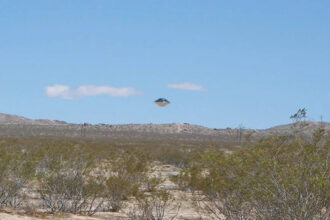
There is another, more controversial domain where Loureiro’s physics repeatedly appears: official government research into Unidentified Aerial Phenomena (UAPs).
Declassified reports from the United States and the United Kingdom describe objects exhibiting extreme acceleration, hypersonic velocities without shock waves, lack of visible propulsion, and unusual interactions with the atmosphere. In multiple documents, concepts such as MHD propulsion, magnetic reconnection, and plasmoid ejection are explicitly discussed.
This does not mean Loureiro worked on secret programs or studied UFOs. There is no evidence of that. But it does mean the mathematics he developed addresses precisely the physical bottlenecks such theories face.
The so‑called “five observables” associated with UAPs all require plasma control, field manipulation, and mastery of instability — the scientific territory Loureiro helped define.
Knowledge that translates into power
In today’s geopolitical landscape, fusion energy, hypersonic weapons, and advanced plasma technologies are arenas of open competition. China invests billions annually in fusion research and leads in patents and workforce training. The United States has placed strategic hopes on SPARC as its counterweight.
In this context, a scientist who can predict when magnetic confinement fails, when turbulence ignites, and when energy will be released ceases to be merely an academic. Such a person becomes strategically relevant.
The death
On the night of December 15, 2025, Nuno Loureiro was shot multiple times in the lobby of his apartment building in Brookline. He was transported to the hospital and died the following morning. No suspects have been identified. No motive has been disclosed. The investigation remains officially ongoing.
There is no evidence that his death was connected to his research. It may have been a random act of violence, a personal tragedy in a country where such events are tragically common. That explanation remains possible and cannot be dismissed.
Yet an unease lingers.
Loureiro stood at the center of technologies worth trillions of dollars, shaping global energy futures, military balance, and fields of physics governments quietly study while publicly downplaying their significance. He understood the precise thresholds where stable systems become explosive — where order collapses into chaos.
That knowledge remains preserved in his published papers. The man himself, however, is gone.
Whether his death was merely another unsolved crime or something more consequential is a question that remains open. In a world where mastery of the boundary between stability and collapse defines power, energy, and technological dominance, some questions refuse to fade quietly.