


For the first time in the history of ufology, a UFO case has undergone the rigorous peer-review process and has been accepted by the prestigious journal Progress in Aerospace Sciences. The news was recently shared with the public by renowned scientist and ufologist Dr. Jacques Vallée during his appearance on The Good Trouble Show.
Although the article was published in June of this year, the news has received little attention in both the academic and ufological communities, despite its great significance. The study brings back to light an episode that had remained buried for nearly 50 years: an observation recorded in 1966 and originally analyzed in the controversial Condon Report — a document that, for decades, was used as a basis to “debunk” UFOs.
Now, revisited by Vallée in collaboration with Luc Dini and Geoffrey Mestchersky, the case takes on new relevance and challenges long-standing interpretations, opening the door for serious scientific investigation of unidentified aerial phenomena in high-impact journals.
Haynesville, Louisiana – December 30, 1966
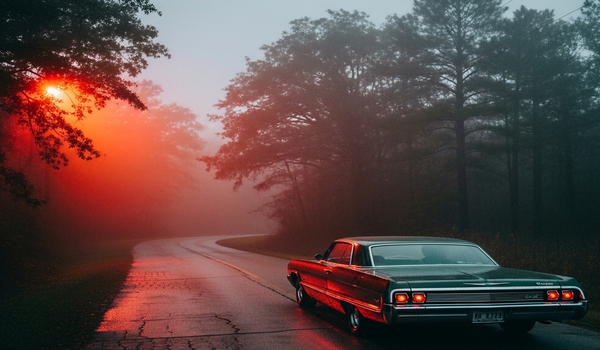
On the night of December 30, 1966, atomic physics professor Louie A. Galloway, 31, was traveling with his wife, Mrs. Galloway, 28, and their two children, aged five and seven, along U.S. Highway 79, heading north through a wooded area near Haynesville, Louisiana.
The sky was heavily overcast, with fog and light drizzle, and the cloud ceiling was about 300 feet. No lightning activity was noted.
As they drove, Galloway’s wife drew his attention to a reddish-orange glow appearing through and above the trees ahead and to the left. Both observed the light, which seemed to originate from a source below the treetops, visible as a luminous hemisphere through the fog and rain. It pulsed regularly, shifting from dull red to bright orange with a period of about two seconds.
When they reached the point on the highway seemingly closest to the source, the light suddenly turned white and brilliant. The flash washed out the car’s headlights, illuminated the landscape, and cast shadows of the trees, forcing the driver to shield his eyes and waking the children.
After about four seconds, the light dimmed and returned to its previous reddish-orange pulsing state. The professor then stopped the car, checked the direction of the source (which was then behind them), and continued driving. No sound or other effects were noted, only the light.
Later, Galloway estimated the distance to the source and compared the brightness to the car’s headlights. From this, he calculated an extremely high luminous power, initially close to 800 megawatts.
Professor Louie A. Galloway reported the case to Barksdale Air Force Base, and the episode reached both the University of Colorado Project and the U.S. Air Force’s Project Blue Book. Ten weeks later, an inspection of the area revealed no explanation for the light.
Significantly, the incident was among the cases that remained classified as “Unidentified” in Dr. Edward Condon’s final report to the National Academy of Sciences in 1969.
The case was recorded in NICAP and, in the Condon Report, it appears as Case 10.

Continuation – Investigations and Physical Evidence
The Condon Study devoted nearly four pages to a detailed analysis of the Haynesville case, including references to infrared photographs and complete meteorological data. Despite these efforts, the original team was unable to immediately identify the exact location of the occurrence. Nevertheless, with the assistance of the main witness, comprehensive records of the area were compiled.
On February 28, 1967, Major Donald R. Ryan, a U.S. Air Force investigating officer, reported his findings to the Foreign Technology Division at Wright-Patterson, highlighting the significance of the incident.

Follow-Up Analyses After the Condon Report
The Colorado Study, published in 1968, did not provide additional information about the case. However, subsequent investigations revealed new details. It was only when Professor Louie A. Galloway, accompanied by his colleague Professor John Williams, returned to the site for a more thorough search that the actual clearing was located. There, the exposed trees could be carefully inspected.
The main witness also produced a more detailed map of the area, showing the layout of a disused railway as well as the location of the first and last observation points of the light.

Physical Conditions at the Site
The exact location of the phenomenon was a clearing approximately nine meters in diameter, marked by a darkening of the tree bark toward the center. The examination indicated that the effect resulted from intense exposure to the object’s light, rather than from a conventional heat source.
Interestingly, neither the original report nor the Colorado Study specified which tree species were affected by the radiation. It is only known that the area is covered with typical Louisiana vegetation.

Energy Estimates and Associated Impacts
Initial energy calculations conducted at the time of the Condon Study found the object’s estimated output to be extraordinary—between 500 and 1400 megawatts, comparable to the output of a small modern nuclear power plant.
High-energy events are not uncommon in UFO/UAP reports. These occurrences are frequently associated with physiological effects on witnesses, including damage to the central nervous system, skin, and eyes, as well as long-term conditions that sometimes require hospitalization and, in rare cases, may be fatal. From a physical standpoint, the most common manifestation is luminous energy, which in some incidents has even triggered streetlight photoreceptors in nearby towns and villages.
Sample Recovery
After the publication of the Condon Report in 1968, Professor Galloway returned to the site with colleagues for a more systematic search. This time, material evidence of radiation exposure was found: fragments of tree bark exhibited clear signs of luminous burns.
The samples were compared with wood collected from areas shielded from the radiation source. The results showed visible differences between the two materials, reinforcing the hypothesis that the Haynesville phenomenon involved an anomalous, high-intensity energy source.

In the article “Estimates of Radiative Energy Values in Ground-Level Observations of an Unidentified Aerial Phenomenon: New Physical Data”, the researchers Jacques Vallée, Luc Dini, and Geoffrey Mestchersky detail how the object caused burns on the bark of nearby trees and emitted light intense enough to outshine car headlights. Initial estimates suggest that the energy radiated by the phenomenon—although lower than the Condon Project estimates (500 to 1,400 megawatts)—could still have been comparable to a small nuclear power plant, between 500 and 900 MW.
Bark fragments collected from the site were analyzed using gamma spectrometry, revealing the presence of natural radionuclides and cesium-137. This discovery raises questions about the source of the radiated energy, as the radiation could not be explained by nuclear tests or known sources at the time. The study ruled out possible contamination from nuclear plants or global radioactive fallout, concluding that the presence of cesium-137 in the fragments is an intriguing finding that requires further investigation.
To understand how the phenomenon’s energy interacted with the environment, the researchers developed 1D thermal diffusion models simulating heat propagation in the tree bark. Simulations indicate that the surface temperature of the trees could have risen from 20°C to over 760°C within seconds, partially charring the bark to a depth consistent with the recovered samples.
The study also presents different hypotheses regarding the radiation: isotropic, radiating in all directions, or directional, similar to a focused beam of light. Depending on the model, the estimated radiated energy could exceed 11 million watts under certain conditions.

The authors emphasize that high-energy incidents are not unique: other observations in the U.S. and France have recorded intense luminous phenomena capable of triggering light sensors in towns and villages, demonstrating that unidentified aerial phenomena can produce measurable physical effects.
Given the complexity of the phenomenon, the researchers suggest further investigations using modern techniques, such as laboratory simulations with high-intensity light sources, systematic sampling of different tree species, and 2D and 3D thermal modeling to evaluate energy distribution. The goal is to refine energy estimates, understand environmental interactions, and identify characteristics of the light emitter.
This work represents a milestone in the scientific investigation of unidentified flying objects, combining historical physical evidence with modern analysis, reinforcing that rigorous studies can generate concrete data on phenomena previously treated only as anecdotal reports.
Below, see Dr. Vallée discussing the case on The Good Trouble Show.