


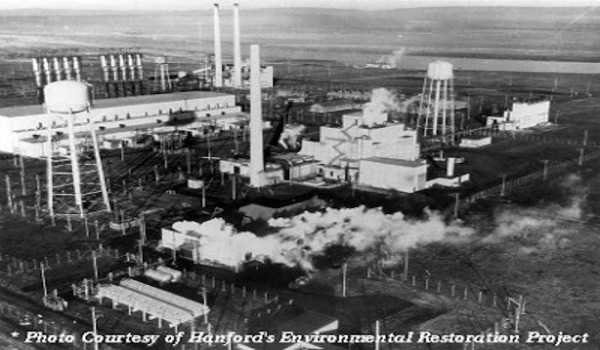
UFO incursions at U.S. atomic and thermonuclear weapons facilities, spanning from the 1940s to nearly the present day, are well-documented. Hundreds of U.S. military veterans, as well as thousands of declassified documents from the Army, Air Force, Navy, FBI, and CIA, reference these incidents. In fact, it can now be asserted that UFOs apparently monitored America’s atomic weapons program even before the bombings of Hiroshima and Nagasaki in August 1945.
During the war, Clarence R. “Bud” Clem was a Chief Lieutenant in the U.S. Naval Reserve, serving as an F6F Hellcat fighter pilot assigned to Air Group 50 aboard the USS Cowpens (CVL-25). In an email dated April 2, 2009, sent to Robert Hastings — an American researcher and author best known for his work on the relationship between UFOs and nuclear facilities, who gained recognition with his book UFOs and Nukes: Extraordinary Encounters at Nuclear Weapons Sites (2008), in which he documents dozens of accounts from U.S. military personnel claiming to have witnessed unidentified flying objects hovering over or interfering with nuclear missile bases since the 1940s — Clem provided the following information:
“Our group was deployed to NAS (Naval Air Station) Pasco, Washington for ground support training in March 1945. The Hanford Ordnance Works was just across the Columbia River from Pasco and designated Top Secret. We experienced an unknown object over the Hanford site in March/April, 1945. I did not fly after the object, as two members of our squadron did, but I did assist in trying to determine what was going on. I am 84 and I do not know if any other members of our squadron are still alive [who] could add more information. If you have any information about our experience, I would like to see what the official report stated.”
The Hanford facility was the plutonium production plant that manufactured the fissile material used in the first atomic bomb — detonated on July 16, 1945, near Alamogordo, New Mexico — as well as in the bomb dropped on Nagasaki, Japan, three weeks later, on August 9.
Hastings replied to Clem, stating that he had no official report related to the Hanford incident and asked for more details. Clem then responded:
“One night, shortly after the evening meal, the officers were gathered at the Officers Club for relaxation when the duty officer at the tower called our commander with a request. Lt. Commander Richard Brown took the call, as the Captain was in conference. Ensign C.T. Neal and I were with Brown and he asked us if we would volunteer to go with him to the flight line for possible duty. We both agreed and a jeep was waiting at the door to take us to the flight line. We learned that an unknown ‘bogey’ was over the Hanford Ordnance Works, according to the radar operator located at an auxiliary field just across the Columbia River from Hanford reservation.
We had been instructed upon arrival that the Hanford Ordnance Works was Top Secret and no flights over any part were permitted…We did not know about the radar, but the duty officer stated that something was in the sky over the area and wanted someone to investigate. A plane was [already] armed and warmed-up on the tarmac. Brown stated he would go and Neal was to stand-by in another plane, in case of trouble. I was to join the [controller] in the tower and communicate info from radar to the pilots.
Brown quickly found the object, a bright ball of fire, and took chase. But he could not close [on it], even with water injection that gave a quick boost in speed. The object headed out NW towards Seattle and was quickly lost by radar. Brown returned to base and we three retired to the club, still shaking and wondering what we had encountered. Memory does not recall details of two similar experiences—I think Neal was to take the next chase—but the object disappeared before he got airborne. I was assigned to fly the entire [Hanford] reservation at low altitude (200 feet or so) to give the radar operator the blind spots [caused by the terrain]…
I do not know if any other incidents occurred after we left Washington. None of the above information was mentioned in the ‘history’ of our squadron but I wonder what is on record at NAS Pasco.”
Hastings then asked Clem, “During the first incident, how long did it take the aircraft to reach Hanford?”
Clem replied, “Not long. An aircraft was always ready to fly on short notice to intercept the Japanese fire balloons. If you read the history of that project and the concern the balloons caused, it would have been logical to intercept them before they could reach Hanford.”
Hastings inquired whether the pilot on the first night, Lieutenant Commander Brown, had described the object in detail, either over the radio or at the Officers’ Club. Clem responded, “He just said it was so bright you could hardly look at it directly. As it approached, it flew northwest at high speed. No maneuvers, really, just a straight-line course.”
Further questions to Clem added some details. Later, he sent Hastings his military records, which revealed that his fighter squadron had been in Pasco from January 9 to February 15, 1945, and not during March and April as he had initially indicated. This fact is significant in light of subsequent developments.
On July 6, 2014, UFO historian Jan Aldrich contacted Hastings, stating that his research group, Project 1947, had obtained documents from the Headquarters of the Fourth Air Force, written during the war, which referred to flyovers of the Hanford site by “unidentified aircraft.”
One of them, dated January 23, 1945, and addressed to the Chief of the Army Air Forces and the Deputy Chief of the Air Staff, Training, states:
“Resulting from an unidentified aircraft flying over the Hanford Engineering Company Plant at Pasco, Wash. on at least three nights in the past month (this Company is engaged in undisclosed projects for the War and Navy Departments) this HQ was requested by [Western Defense Command], about ten days ago, to move one [battery] of searchlights from Seattle to the Pasco plant. The Thirteenth Naval District has made arrangements for Naval Air Station, Pasco, to employ both radar and fighter aircraft in attempting interception of these unidentified aircraft. The airspace over the Hanford Company is both a Danger area and a Restricted area. Our battery of searchlights has been in place since 15 January; one incident has occurred since that date in which a brief radar contact was made—attempted night interception again failed.”

So here we have an official document referring to one or more unidentified aircraft flying over the Top Secret Hanford atomic materials production plant on three occasions between late December 1944 and late January 1945. At least one of those “aircraft” was tracked on radar and successfully eluded the U.S. Navy fighter sent up to intercept it.
A second record, dated January 25, 1945, states:
“Western Defense Command and Army Commands represented at the Hanford Engineering Co, Pasco, have informally asked HQ Fourth Air Force for one or more night fighter aircraft to be based, temporarily, at Naval Air Station, Pasco, for employment against the alleged “bogie” which has been detected by radar on several nights in the past three weeks.”

Here, we find that radar tracks of the unidentified aircraft occurred more than once. There are no known records confirming that any Japanese fixed-wing aircraft flew over the Hanford site. Regarding the fire balloons, on March 10, 1945, one descended near the facility, causing a short circuit in the power lines supplying electricity to the nuclear reactor cooling pumps, but the power was quickly restored.
In any case, given Bud Clem’s description of the object that passed Lieutenant Commander Brown, it seems highly unlikely that it was of Japanese origin. Again, Clem told Hastings: “[Brown] just said it was so bright you could hardly look at it directly. As it approached, it flew northwest at high speed. No maneuvers, really, just a straight-line course.”
Considering the available data, it appears that genuine UFOs were indeed operating near the Hanford site in early 1945, just a few months before the Hiroshima and Nagasaki attacks. If that was the case, one might question whether the unknown craft — piloted or remotely controlled — was also monitoring other operations associated with the U.S. atomic weapons program.
In fact, one might even speculate whether UFOs were present during the atomic attacks themselves. It should be emphasized that no reliable evidence exists to support this possibility; however, military records confirm sightings of “Foo Fighters,” orb-like objects, by U.S. Air Force bomber crews on missions over Japan during the early months of 1945, and this is a matter of historical record.
Over the past four decades, Robert Hastings has interviewed more than 160 U.S. Air Force veterans regarding their involvement in UFO incidents at nuclear weapons facilities.
CNN broadcast his press conference live on September 27, 2010, in Washington, D.C. During the event, seven retired Air Force officers revealed that UFOs had monitored and even disabled U.S. nuclear missiles for decades.