



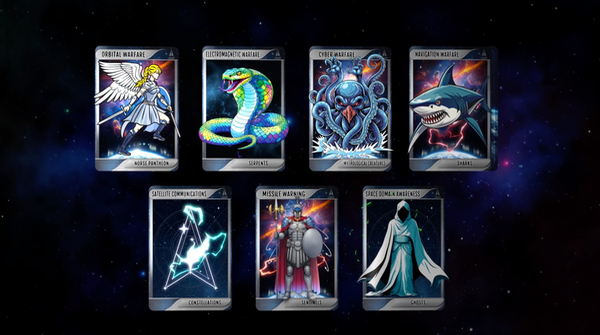
The United States Space Force is implementing a new naming system for its satellites, cyber tools, and other space warfare systems. The goal is to give these systems more recognizable and memorable identities, similar to those long used in other branches of the Armed Forces.
In his opening speech at the Spacepower conference on December 11, Chief of Space Operations General Chance Saltzman explained that the Space Force will begin assigning meaningful nicknames to operational systems. These names will be based on themes that reflect the character of each mission area and provide operators with a clear cultural reference.
This change brings the Space Force closer to established practices in the Army and Air Force, which have long used names such as the Abrams tank or the Fighting Falcon fighter jet to provide clarity, esprit de corps, and unit identity.
Saltzman noted that operational units spent about a year developing reference terms to consolidate the identity of space weapon systems, creating something operators could feel ownership over as the Space Force integrates into joint combat planning.
/i.s3.glbimg.com/v1/AUTH_59edd422c0c84a879bd37670ae4f538a/internal_photos/bs/2020/j/B/ERs0wATJCp1Irwh5TI3w/space-force.jpg)
After several rounds of feedback and deliberation, Saltzman stated:
“We chose to represent each of our mission areas with a specific symbolism. These symbols evoke the character of the systems, the importance of their mission, and the identity of those who operate them.”
The result is a taxonomy of seven categories, each linked to a mission area and assigned a specific naming theme:
- Orbital Warfare Systems – names inspired by the Norse pantheon.
- Cyber Warfare Tools – names of mythological creatures.
- Electromagnetic Warfare Systems – names of snakes.
- Navigation Tools – names of sharks.
- Missile Warning Systems – names of sentinels.
- Space Situational Awareness Systems – names of ghosts.
- Satellite Communication Systems – names of constellations.
Saltzman emphasized that the Space Force was also careful to avoid copyright issues, choosing broad symbolic categories such as “ghosts” or “constellations” that no one could claim ownership of.
Some units have already adopted the new naming approach:
- The 10th Space Operations Squadron named its geostationary ultra-high frequency (UHFF) communications platform Ursa Major, establishing the standard for all satellite communication systems.
- The 1st Space Operations Squadron named its ORS-5 surveillance satellite Bifrost, inspired by Norse mythology, setting the Norse naming convention for orbital warfare assets.
According to Saltzman, the initiative aims to strengthen operators’ sense of identity, especially for those managing systems often hidden behind confidential designations or obscure numerical labels. He said:
“In some ways, this is about creating a culture where the people responsible for a mission feel directly connected to it. It is hard to connect to a program name or a numbered system in the weapons catalog.”
The new naming system will apply to both new and existing platforms as the Space Force updates its inventory. This initiative is part of a broader effort to consolidate a distinct institutional culture, even as the service remains administratively under the Air Force and continues maturing its missions amid the growing militarization of space.
Saltzman described the Space Force as a highly technical service, but emphasized:
“Our identity is rooted in both the systems we employ and the people who operate them.”
In addition to thematic nicknames, the Space Force is implementing a new alphanumeric designation system for satellites: each spacecraft will receive a two-letter prefix indicating its mission type, followed by a number.
For example, the next generation of geostationary reconnaissance satellites will have the designation RG-XX, adding a standardized classification layer to complement the symbolic operational system names.




….stargate would like to have a word with space force /joke